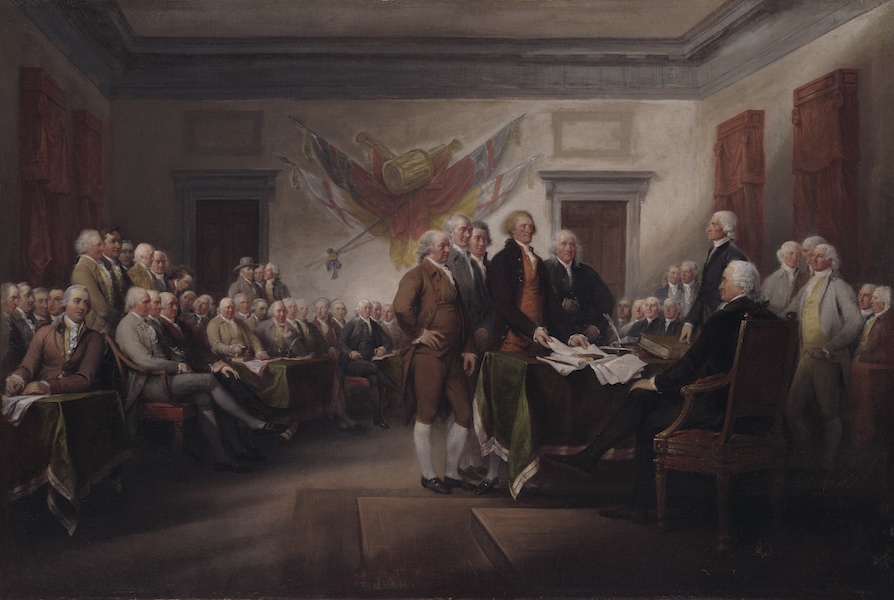
On July 4, 1776, the Second Continental Congress formally adopted the Declaration of Independence in Philadelphia, a watershed moment that transformed the American colonies from a collection of protesting territories into a new, sovereign entity. While Congress had actually voted for independence two days earlier on July 2, the approval of the final text—primarily authored by Thomas Jefferson—officially articulated the reasons for the break. This document served both as a justification for the rebellion to the world and a unifying manifesto for the colonies, framing the struggle not merely as a tax dispute, but as a fight for the fundamental rights of humanity.
By severing political ties with Great Britain, the Continental Congress accepted the high-stakes reality of full-scale war. The move turned the conflict into an international affair, making it possible for the fledgling nation to seek formal military and financial alliances with European powers like France. It was a declaration of no return; the delegates, by affixing their signatures to the document, effectively committed high treason against the British Crown, ensuring that the only path forward was victory or total submission.