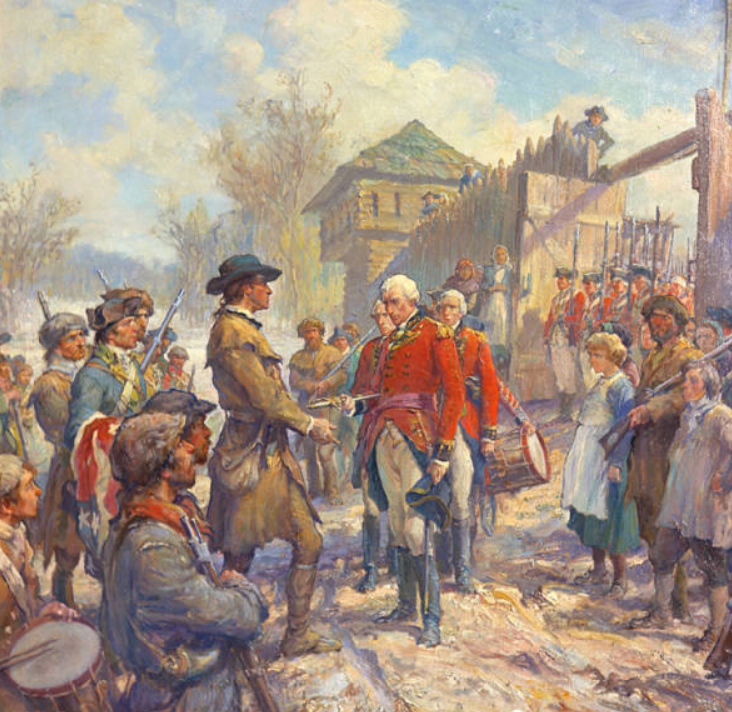
In July 1778, George Rogers Clark led a daring expedition into the Illinois Country, successfully capturing the British-held outpost of Kaskaskia without firing a shot. Relying on surprise and psychological tactics, Clark and his small force of frontiersmen infiltrated the town under the cover of darkness. By intimidating the local French inhabitants and capitalizing on their fear of British retaliation, he secured the surrender of the fort and effectively neutralized British control over this strategically vital position along the Mississippi River.
This victory was a critical component of the broader Illinois campaign, intended to disrupt British supply lines and reduce the persistent threat of indigenous raids on the American frontier, which had been encouraged by the British. Securing Kaskaskia, and subsequently Cahokia and Vincennes, fundamentally shifted the balance of power in the Ohio Valley. It ensured that the United States would have a strong claim to this vast territory during future peace negotiations, effectively expanding the potential borders of the new nation far beyond the original thirteen colonies.